Is 2 Days a Week of Preschool Enough for a 3-Year-Old?
Is 2 Days a Week of Preschool Enough for a 3-Year-Old?
If you are home with your two or three-year-old, you may find yourself wondering whether preschool is really necessary yet.
Maybe you are a stay-at-home mom who enjoys having your child home with you. Maybe you work from home and have built a schedule that allows you to spend more time together. Maybe you are considering homeschooling and you do not want to rush your little one into a traditional five-day school schedule.
Then another thought creeps in.
Would a couple of days of preschool actually be good for my child?
For many two and three-year-olds, the answer can be yes, especially if the two is potty-trained already.
Preschool does not have to mean five long days away from home. A smaller part-time schedule can give a young child opportunities for independence, friendship and learning while still leaving plenty of time for family life.
Two Days Can Be a Meaningful Beginning
At two and three years old, children are still very young.
They do not necessarily need a packed schedule to benefit from a preschool environment. What matters more than simply counting the number of days is the quality and consistency of the experience.
Two predictable days each week can give a child time to become familiar with the same teacher, classmates, classroom routines and learning environment.
Over time, your child begins to understand:
"This is my school."
"These are my friends."
"I know what happens here."
That familiarity can help a young child feel safe enough to explore, participate and become more independent.
Preschool Offers Something Different From Home
A loving home provides a tremendous foundation for a child.
Choosing preschool does not mean that what you are doing at home is not enough.
Home and preschool simply provide different experiences.
At home, your child may cook with you, read books, help with household tasks, visit the library, play outside and learn naturally throughout the day.
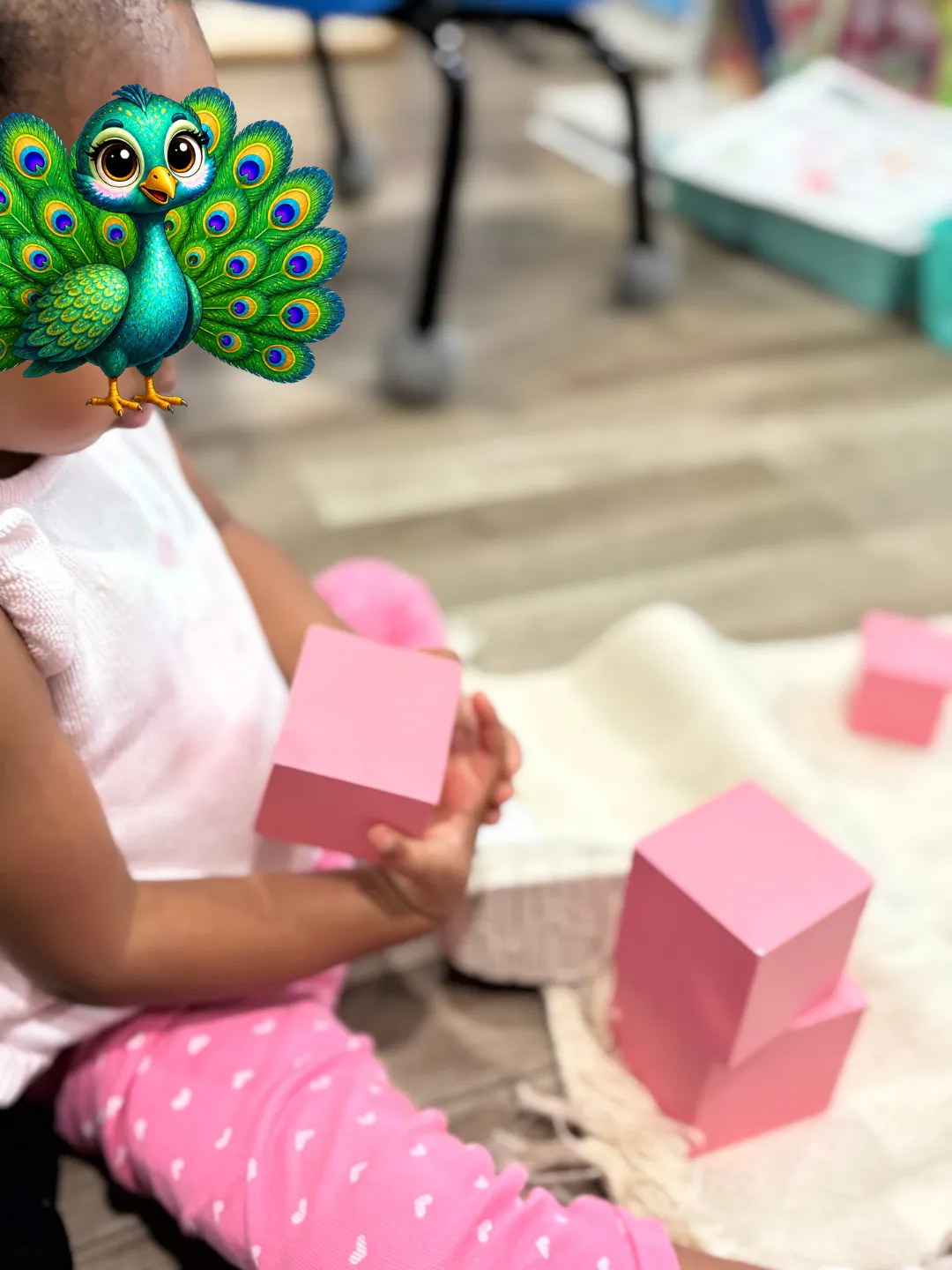
In a small preschool environment, your child gets to practice those growing skills alongside other children.
That might mean waiting for a turn with a favorite activity, choosing work independently, cleaning up after themselves, sitting together for a group activity, solving a disagreement with a friend or learning to ask another adult for help.
Those may look like small moments to us.
For a toddlers, they are important steps toward independence.
What About Socialization?
This is one of the biggest questions parents have, especially stay-at-home and homeschool families.
Your toddler does not need to be surrounded by dozens of children every day to learn how to socialize.
In fact, a smaller consistent group can be a wonderful environment for learning how relationships work.
Children have the opportunity to recognize the same friends each week. They learn personalities and preferences. They begin forming real relationships instead of simply playing beside a different group of children each time they visit a playground or children's activity.
Social development at this age is not about being popular.
It is learning how to enter play, share space, communicate needs, wait, listen, cooperate and recover when things do not go exactly as planned.
Those lessons happen naturally when children spend consistent time together.
Can Preschool Work With Homeschooling?
Absolutely.
Preschool and homeschooling do not have to be opposite choices.
Some families enjoy creating a hybrid lifestyle during the early years.
Your child might attend a small preschool program part of the week then spend the rest of the week learning at home, visiting museums, going to the library, participating in church activities, exploring nature or simply enjoying family life.
For parents who plan to homeschool later, preschool can also give a child an opportunity to experience a classroom community without committing the family to traditional schooling long term.
Think of preschool as another resource in your child's learning environment rather than a replacement for learning at home.
What About Moms Who Work From Home?
Working from home sounds wonderfully flexible until you try answering an important phone call while your toddler urgently needs you to inspect a cracker.
Young children need interaction and attention.
Trying to provide that attention while completing focused work can leave both parent and child frustrated.
A part-time preschool schedule can create predictable periods when your child is engaged in meaningful activities and you can concentrate on your work.
You still get the flexibility and family time you wanted when you chose to work from home without expecting a three-year-old to quietly entertain themselves for hours.
Is Your Two or Three-Year-Old Ready?
Rather than asking only, "Is two days enough?" consider asking:
Does my child seem interested in other children?
Would my child benefit from practicing independence away from me?
Would a consistent routine outside our home be helpful?
Would I like my child to experience a classroom without attending school every day?
Do I want additional support nurturing my child's learning and development?
If several of those answers are yes, a part-time preschool experience may be worth exploring.
Your child does not have to know every letter, count to 100 or be academically advanced before starting preschool.
Preschool is where children practice being part of a learning community.
You Do Not Have to Choose Between Home and Preschool
For families in Fort Lauderdale and surrounding Broward County communities, there are many ways to approach the preschool years.
The right schedule is the one that fits your child and your family's values.
For some families, that means full-time care.
For others, especially stay-at-home families, homeschool-minded families and work-from-home parents, a smaller preschool experience may provide exactly what they are looking for.
At Ambassador Kids Montessori, we believe young children thrive when they are known personally, encouraged to become independent and given opportunities to learn at their own pace.
A preschool experience does not have to take over your child's week.
Sometimes a little bit of school, surrounded by the right people and in the right environment, can make a very big difference.
If you are exploring preschool in Fort Lauderdale and wondering what type of environment would be the best fit for your child, we invite you to learn more about Ambassador Kids Montessori and our small, relationship-centered approach to early childhood education.
Wondering if a small, part-time preschool could be the right fit for your child?
Ambassador Kids Montessori offers a warm, small-group preschool experience in Fort Lauderdale for families who value individualized attention, independence and meaningful learning without needing a traditional full-time daycare schedule.
Learn more about Ambassador Kids Montessori and take the first step toward finding the right fit for your family.
© Ambassador Kids Montessori
Contact Us: