
Montessori vs Daycare
Montessori vs. Daycare: What Parents Should Know Before Choosing
Updated October 2026 | By L. Thia Bethell, Ambassador Kids Montessori
If you're comparing Montessori vs. daycare for your preschooler, you may be wondering which environment will best support your child's learning, independence and development.
Both Montessori preschools and traditional daycare programs can offer nurturing care, social opportunities and valuable early learning experiences. The main difference is often found in how children learn, how the classroom is organized and how teachers introduce activities.
Montessori education uses a carefully prepared environment, hands-on learning materials and individualized lessons to help children develop concentration, independence and practical life skills. Traditional daycare programs vary considerably, with some emphasizing childcare routines and others providing structured preschool curricula.
At Ambassador Kids Montessori in Fort Lauderdale, Florida, our Christian Montessori micro-school serves children ages 3 to 5 in a small home-based learning environment.
Let's explore one of the most noticeable differences between Montessori and daycare: the materials children use and what those materials are designed to teach.
Montessori vs. Daycare: What's the Main Difference?
Montessori is an educational philosophy developed by Dr. Maria Montessori. It emphasizes observation, independence, hands-on discovery and learning through purposeful activity.
Daycare, on the other hand, is a broad term describing programs that care for children while their parents work or manage other responsibilities.
Some daycare centers primarily provide childcare while others offer comprehensive early childhood education.
This means Montessori and daycare are not necessarily opposites. A childcare program can incorporate Montessori principles and many traditional daycare classrooms provide engaging, developmentally appropriate learning experiences.
The important question is not simply which program has the better label.
It is how the environment supports your individual child.
Montessori vs. Traditional Daycare: A Quick Comparison
Feature | Montessori Preschool | Traditional Daycare |
|---|---|---|
Educational approach | Child-centered, individualized and hands-on | Varies by program and curriculum |
Learning materials | Purposeful materials with specific learning objectives | Toys, books, manipulatives and educational materials |
Activities | Children often choose from prepared learning activities | May include group lessons, free play and teacher-directed activities |
Teacher's role | Observes, guides and presents lessons | Supervises, teaches and facilitates development |
Independence | Intentionally practiced through everyday routines | Encouraged to varying degrees |
Classroom environment | Carefully organized with accessible materials | Organization varies by philosophy and program |
Learning pace | Lessons introduced according to readiness | Individualization varies by program |
Neither approach automatically guarantees better outcomes. Teacher quality, classroom relationships, safety, developmental appropriateness and the needs of the child are essential considerations.
1. Montessori Materials Have a Specific Educational Purpose
Walk into a Montessori classroom and you may notice something different.
Rather than shelves filled with a large variety of toys, you'll often see carefully arranged materials on low shelves.
Children can select appropriate materials, carry them to a workspace and complete activities with increasing independence.
Many Montessori materials are designed to isolate one particular concept or skill.
For example, the Montessori Pink Tower consists of ten pink wooden cubes that gradually increase in size.
As children construct the tower, they explore visual discrimination, dimension, coordination and concentration.
Other materials prepare children for later concepts in mathematics, language and science.
This intentional progression is an important characteristic of Montessori education.
2. Why Montessori Children Use Real-Life Materials
One of the most meaningful differences between Montessori and many conventional preschool environments is the emphasis on Practical Life activities.
In Montessori, children may use child-sized pitchers, cloths, bowls, trays and other familiar household materials.
For example, a child practicing water pouring learns to carefully lift a pitcher, control its movement, transfer water and clean up spills.
A simple activity can develop several skills:
Hand-eye coordination
Concentration and attention
Fine motor control
Independence
Responsibility for the environment
Confidence through repetition
The materials are selected for their developmental purpose and used with appropriate instruction and supervision.
Montessori educators may introduce glass or ceramic materials when children are ready to handle them safely.
The goal is not to expose children to unnecessary risks. It is to teach careful movement, respect for materials and increasing responsibility.
Why Does Practical Life Matter?
Think about what happens when a child first tries to pour a drink independently.
The child must coordinate both hands, judge the movement of the pitcher and notice whether the glass is filling.
They may spill a little.
They can then practice using a cloth to clean the area.
Instead of doing everything for the child, the adult provides guidance and gives the child opportunities to practice.
These experiences help children develop skills they can use beyond the classroom.
3. Montessori Materials Encourage Learning Through the Senses
Young children learn through touching, observing, moving, listening and exploring.
Montessori Sensorial materials provide carefully structured opportunities to refine these abilities.
Three familiar examples include:
The Pink Tower
Ten wooden cubes increase gradually in size.
Children learn to distinguish differences in dimension while practicing coordination and visual judgment.
The Brown Stair
Ten wooden prisms vary in thickness.
Children compare dimensions, refine visual perception and explore relationships between objects.
Knobbed Cylinders
Wooden cylinders vary in height or diameter and fit into corresponding openings.
As children remove and replace the cylinders, they refine visual discrimination, coordination and careful hand movements.
These materials can be introduced through individual lessons and repeated as children develop mastery.
Traditional preschools and daycare centers may offer puzzles, blocks, sorting toys and other excellent sensory materials.
The Montessori distinction is the deliberately sequenced system of materials and lessons, rather than the belief that conventional toys have no educational value.
4. Montessori Learning Builds Independence Through Everyday Activities
A central principle of Montessori education is helping children become increasingly capable of doing things for themselves.
Children are encouraged to participate in age-appropriate responsibilities, such as:
Choosing and returning classroom materials
Carrying work to a table or mat
Pouring water
Cleaning their workspace
Practicing dressing skills
Caring for classroom plants
Completing and repeating learning activities
These tasks may seem simple to adults, but they can represent meaningful developmental milestones for young children.
Consider a three-year-old who initially struggles to carry a tray without spilling its contents.
With demonstration, encouragement and repeated practice, the child may eventually carry it independently.
The accomplishment is about more than moving a tray.
It represents growing confidence, coordination and self-control.
This is one reason Montessori educators place significant value on purposeful activity.
5. Is Montessori Better Than Daycare for Preschoolers?
Montessori may be a good choice for families who value independent learning, hands-on education, purposeful classroom materials and individualized lessons. Traditional daycare may be a better fit for families needing different schedules, care arrangements or an educational approach that better matches their child's needs.
The name of a program is less important than what happens inside its classroom.
When comparing schools, parents should observe how teachers communicate with children, what activities are available and whether the environment feels welcoming.
For families considering Montessori, it is worth asking whether teachers have Montessori training and how the school uses Montessori materials in daily lessons.
Not every program that uses the Montessori name follows the same practices.
6. What Makes Ambassador Kids Montessori Different?
At Ambassador Kids Montessori, we combine Montessori educational principles with a Christian foundation in a small, home-based learning environment.
Our program serves children ages 3 to 5 in Fort Lauderdale, Florida.
We intentionally limit enrollment to a maximum of five children.
Our small classroom creates opportunities to observe children's learning, introduce lessons according to readiness and develop meaningful relationships with families.
A Small Classroom
With a maximum of five children, we can provide individualized guidance while allowing children opportunities to work alongside peers.
Hands-On Montessori Learning
Our classroom includes Practical Life, Sensorial, Language, Mathematics and other learning experiences designed to encourage exploration and independence.
Christian Values
We integrate Christian values into our learning environment through an emphasis on kindness, grace, responsibility, compassion and respect.
Parent Partnership
We value open communication with families and recognize that parents are essential partners in their child's education.
Our goal is to nurture children academically, socially, emotionally and spiritually in an environment where they feel known and supported.
7. How Can Parents Choose Between Montessori and Daycare?
Before enrolling your preschooler, consider visiting programs and asking questions that go beyond tuition and operating hours.
Here are five useful questions:
1. How do teachers introduce new activities?
Ask whether lessons are individualized, taught in groups or presented through both approaches.
2. What kinds of learning materials do children use?
Observe whether activities encourage experimentation, concentration, creativity and problem-solving.
3. How much independence do children practice?
Ask about classroom responsibilities and daily self-care routines.
4. What is the classroom environment like?
Consider whether your child would feel comfortable with the noise level, schedule and interactions.
5. How does the school communicate with families?
Look for opportunities to discuss your child's development and experiences.
Remember that a school can look beautiful in photographs and still be the wrong fit for your family.
Whenever possible, learn how the program operates on an ordinary school day.
Frequently Asked Questions About Montessori vs. Daycare
Is Montessori the same as daycare?
No. Montessori is an educational approach emphasizing hands-on learning, independence and a carefully prepared environment. Daycare describes childcare services that may use many different educational philosophies, including Montessori.
Do Montessori preschools use toys?
Yes, Montessori environments provide materials children enjoy exploring. However, traditional Montessori classrooms emphasize carefully designed educational materials with specific developmental purposes rather than relying primarily on conventional toys.
Is Montessori appropriate for a three-year-old?
Yes. Montessori preschool programs commonly serve children beginning around age three. Activities are introduced according to individual readiness and may include Practical Life, Sensorial, Language and early Mathematics experiences.
Does Montessori help children become independent?
Montessori education intentionally provides opportunities for children to practice age-appropriate independence through everyday activities, self-care routines and purposeful work. Each child's development progresses at an individual pace.
Is Montessori more academic than daycare?
Not necessarily. Many daycare programs offer strong early childhood curricula. Montessori integrates academic concepts into a structured sequence of hands-on learning experiences while also emphasizing practical skills, social development and independence.
Is Ambassador Kids Montessori a Christian preschool?
Yes. Ambassador Kids Montessori is a Christian Montessori micro-school in Fort Lauderdale, Florida, combining hands-on education with faith-centered values and character development.
What ages does Ambassador Kids Montessori serve?
Ambassador Kids Montessori serves children ages 3 to 5. Our small home-based program limits enrollment to a maximum of five children.
What are the hours at Ambassador Kids Montessori?
Our regular preschool schedule is Monday through Thursday from 9:00 AM to 2:30 PM.
Discover a Different Kind of Preschool in Fort Lauderdale
Choosing between Montessori and daycare is an important decision, but it does not have to be overwhelming.
Look for an environment that aligns with your family's values, respects your child's individual needs and provides meaningful opportunities for learning.
At Ambassador Kids Montessori, we believe children grow through purposeful activity, caring relationships and opportunities to develop independence.
If you're looking for a preschool where your child can grow, mature and become more confident in their abilities, Ambassador Kids Montessori may be the right fit for your family.
Our small Christian Montessori environment provides opportunities for children to develop independence, strengthen concentration, build meaningful relationships and discover the joy of learning at their own pace.
Schedule a Virtual Introduction
Visit https://m.akmfamily.com/widget/bookings/virtual-tour-introduction.com to discover our approach and inquire about enrollment.
Small school. Purposeful learning. Growing independence.
About the Author
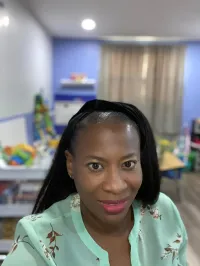
L. Thia Bethell is the founder and Montessori directress of Ambassador Kids Montessori in Fort Lauderdale, Florida. She holds a M.Ed and a degree in Early Childhood Education and has extensive experience working with young children. Her educational approach emphasizes hands-on discovery, individualized learning, Christian values and meaningful partnerships with families.https://ambassadorkidsmontessori.com/
© Ambassador Kids Montessori
Contact Us: