Preschooler Sleep Routines and Tips | Ambassador Kids Montessori Fort Lauderdale
Why Sleep Matters More Than Parents Realize
Sleep is not just rest for preschoolers. Sleep is one of the most powerful tools for healthy brain development, emotional regulation and learning. During sleep, a child’s brain processes new information, stores memories and resets emotional responses. When preschoolers do not get enough quality sleep, it shows quickly, through meltdowns, impulsive behavior, difficulty focusing and struggles with independence.
Parents often feel stuck at bedtime. Long workdays, busy schedules and constant stimulation make evenings challenging. Many families do what works fastest in the moment. However short-term solutions often create long-term struggles.
Preschool-aged children thrive on calm, consistency and intentional routines. Their brains are still developing and they rely on adults to set boundaries that protect that development. This article shares practical, developmentally appropriate sleep tips to help families build bedtime routines that truly support young children.
If you are looking for a preschool that understands early brain development and partners with families to support healthy routines, learn more about Ambassador Kids Montessori here:
👉 https://ambassadorkidsmontessori.com/
Tip 1: Consistent Bedtime and Wake-Up Times Build Security
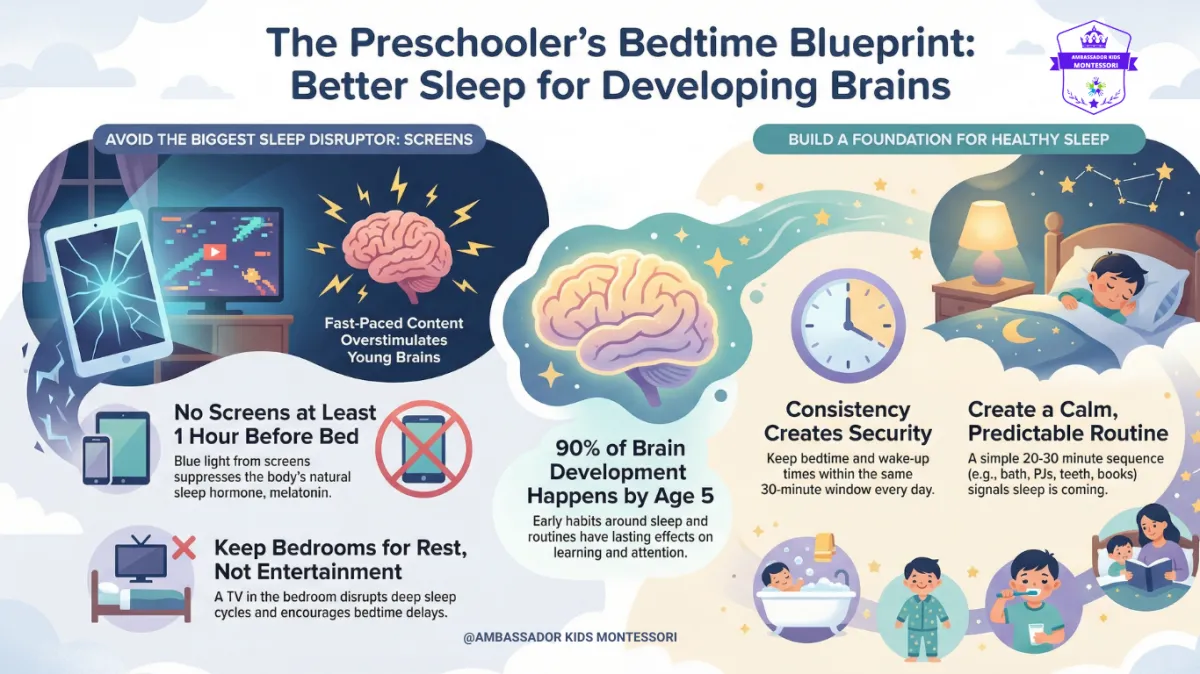
Preschoolers need predictable schedules. A consistent bedtime and wake-up time help regulate the body’s internal clock, also known as the circadian rhythm. When bedtime shifts every night, the brain does not know when to release melatonin, the hormone responsible for sleep.
Children may appear tired yet struggle to fall asleep because their internal rhythm is confused. This often leads to bedtime resistance, night wakings and early morning wake-ups.
Aim to keep bedtime within the same 30-minute window every night, including weekends. Wake-up times should also remain consistent. Sleeping in too late can disrupt the next night’s sleep.
Consistency creates safety. Safety allows the nervous system to relax.
Tip 2: Create a Calm and Predictable Bedtime Routine
A bedtime routine should feel boring in the best way possible. This is not the time for excitement, negotiations or new activities. A predictable routine signals to the brain that sleep is coming.
A strong routine typically includes:
Bath or wash-up
Pajamas
Brushing teeth
One or two calm books
Lights out
Avoid adding stimulating steps like snacks after brushing teeth or screen-based activities. The routine should take about 20 to 30 minutes and follow the same order each night.
Children resist bedtime less when they know exactly what comes next.
Tip 3: Screen Time Before Bed Disrupts Sleep
Screens are one of the biggest sleep disruptors for preschool-aged children. Tablets, phones and televisions emit blue light that suppresses melatonin production. This delays sleep onset and reduces sleep quality.
Even educational screen content can overstimulate a young brain before bed. Fast-moving images condition the brain to expect constant novelty and instant gratification. When the screen turns off, the brain struggles to slow down.
Preschoolers should have no screen time at least one hour before bedtime.
Educators often see the classroom impact of excessive screen exposure. Children accustomed to fast-paced videos struggle with patience, sustained attention and teacher-guided activities. They expect instant entertainment and have difficulty engaging in slower, meaningful work.

Tip 4: Television in the Bedroom Creates Sleep Challenges
A television in a child’s bedroom sends a mixed message about sleep. Even when it is not used every night, its presence encourages negotiation and bedtime delays.
Background television noise disrupts deep sleep cycles. Children may appear asleep while their brains remain partially stimulated. This can result in early waking, irritability and reduced focus the next day.
Bedrooms should be calm spaces designed for rest, not entertainment.
Tip 5: Video Games Are Not Developmentally Appropriate
Video games are designed for mature brains capable of rapid processing, impulse control and emotional regulation. Preschoolers are still developing these skills.
Video games reward instant reactions and constant stimulation. Even brief exposure can overstimulate the nervous system, leading to difficulty settling at night and increased frustration during the day.
Children exposed to video games often struggle with waiting, transitions and emotional regulation in group settings.
Young children need real-world experiences, not digital rewards.

Tip 6: Tablets Encourage Passive Regulation
Tablets are often used to keep children quiet or calm. While this may work temporarily, it teaches children to rely on external stimulation to regulate emotions.
Handing a tablet to stop a tantrum or boredom prevents the child from learning self-soothing skills. Passive binge watching, even when labeled educational, does not support healthy brain development when overused.
Children need guided experiences to learn how to calm their bodies and minds.
Tip 7: Parents’ Phones and the “Quick Fix” Habit
Handing a child a phone to stop crying or whining is common and understandable. Parenting is demanding. However this habit teaches the brain to avoid emotions rather than process them.
Fast-moving phone videos condition children to expect instant distraction. In classrooms, this shows up as difficulty waiting, reduced frustration tolerance and resistance to teacher-led activities.
Children need adults to help them work through emotions, not escape them.
Tip 8: Be Intentional About What Your Child Watches
Not all screen time is harmful. Some content is thoughtfully designed and educational. However parents should actively preview and research what their child watches.
Ask:
Is the pace slow and calm?
Is the language respectful?
Does it encourage thinking rather than flashing images?
Better yet, watch content together. Avoid leaving children to zone out in front of screens designed for developed brains.
Tip 9: Early Brain Development Makes These Choices Critical
According to the Center on the Developing Child at Harvard University, approximately 90 percent of a child’s brain develops by age five. Neural pathways form rapidly based on early experiences.
Source:
Harvard University, Center on the Developing Child
https://developingchild.harvard.edu
This means early habits around sleep, routines and stimulation have lasting effects. Conscious decisions during these years shape attention, emotional regulation and learning capacity.
Tip 10: Encourage Independence at Bedtime
Preschoolers are capable of meaningful independence. Encourage your child to participate in bedtime routines. Let them choose pajamas, help set up their bed or turn book pages.
Avoid lying down with the child until they fall asleep every night. This can create dependency and increase nighttime waking.
Offer reassurance, consistency and a calm presence instead.
Bonus Tip: Daytime Routines Affect Nighttime Sleep
Sleep begins in the morning. Children who have structured daytime routines sleep better at night.
Ensure children have:
Outdoor play
Physical movement
Predictable meals
Limited sugar, especially in the evening
Late naps can interfere with bedtime for older preschoolers. Balance during the day supports rest at night.

Preschoolers are not small adults. Their brains are under construction. They rely on adults to create environments that protect development even when it feels inconvenient.
Mindless binge watching, excessive digital stimulation and inconsistent routines may make evenings easier short term but often lead to long-term challenges.
Intentional sleep routines are an investment in your child’s emotional health, learning ability and overall well-being.
Parents who want to see how calm routines and independence are supported in our classroom are welcome to schedule a tour here:
👉 https://ambassadorkidsmontessori.com/calendar-tour
Families ready to move forward can register today to secure their child’s spot:
👉 https://ambassadorkidsmontessori.com/local-registration-stripe


